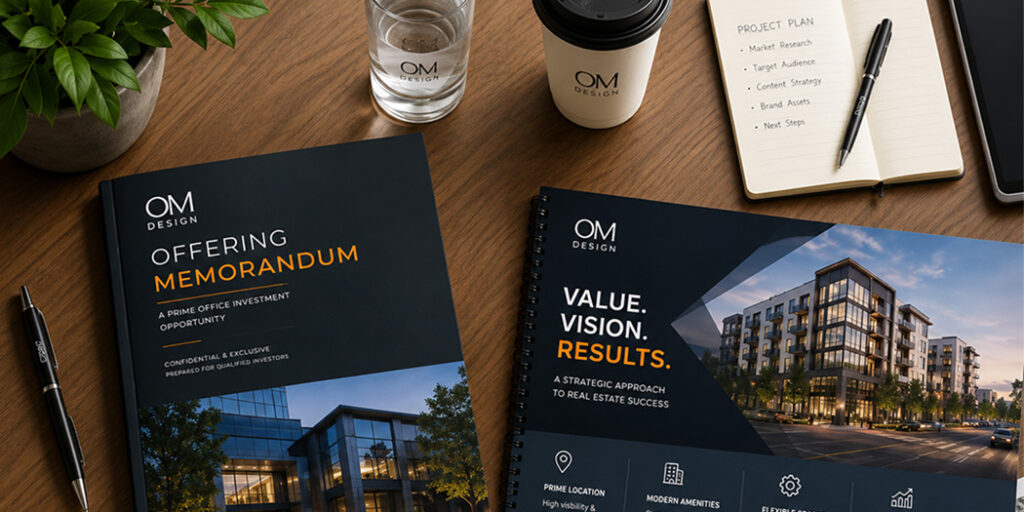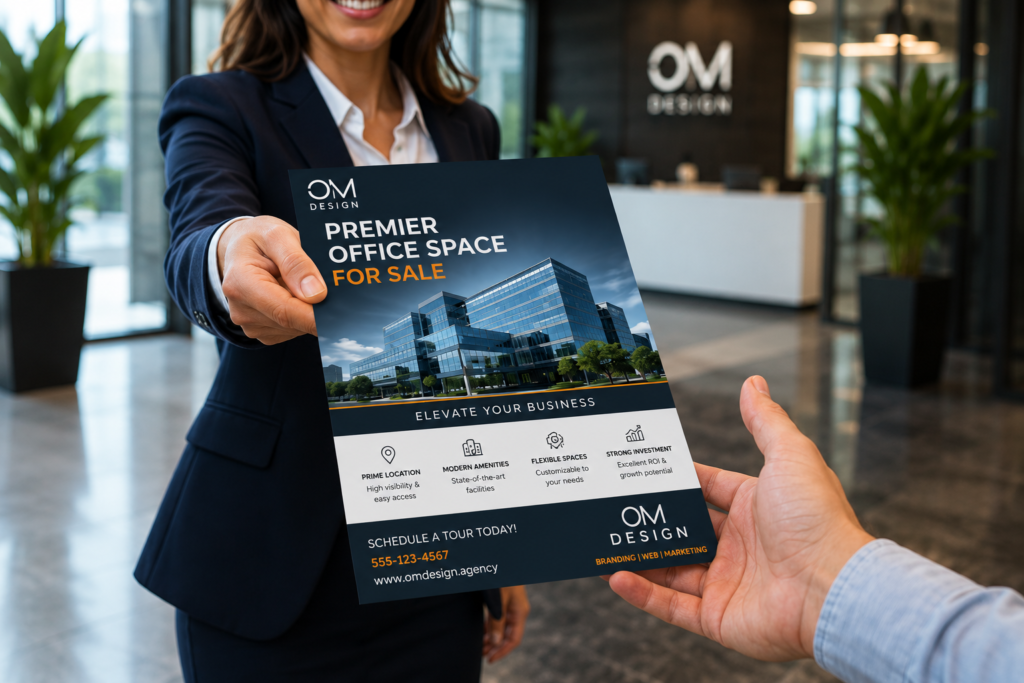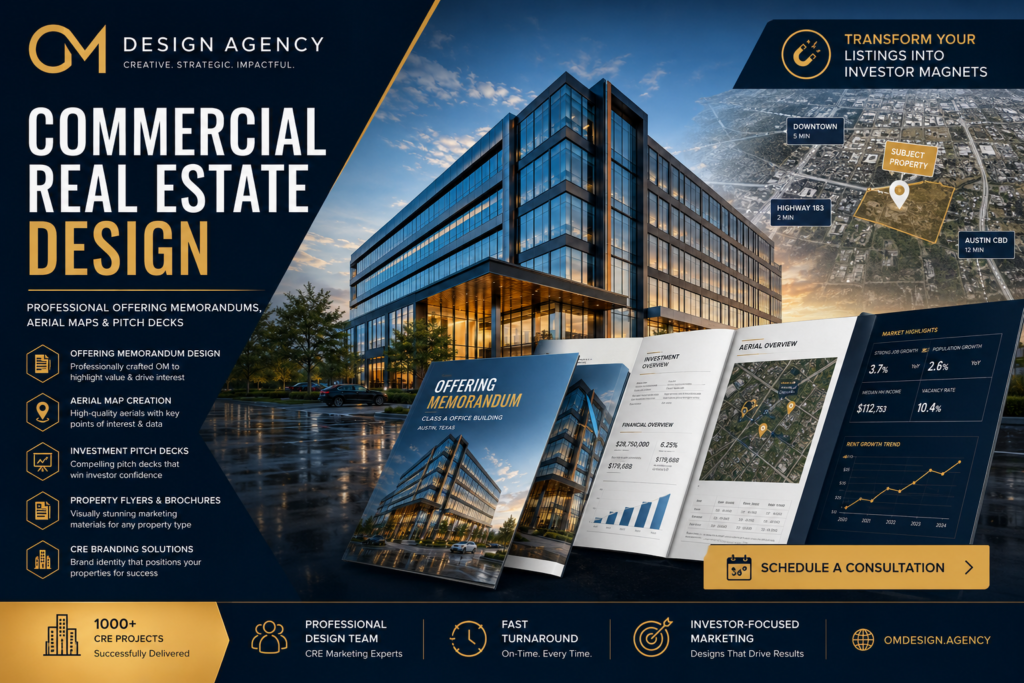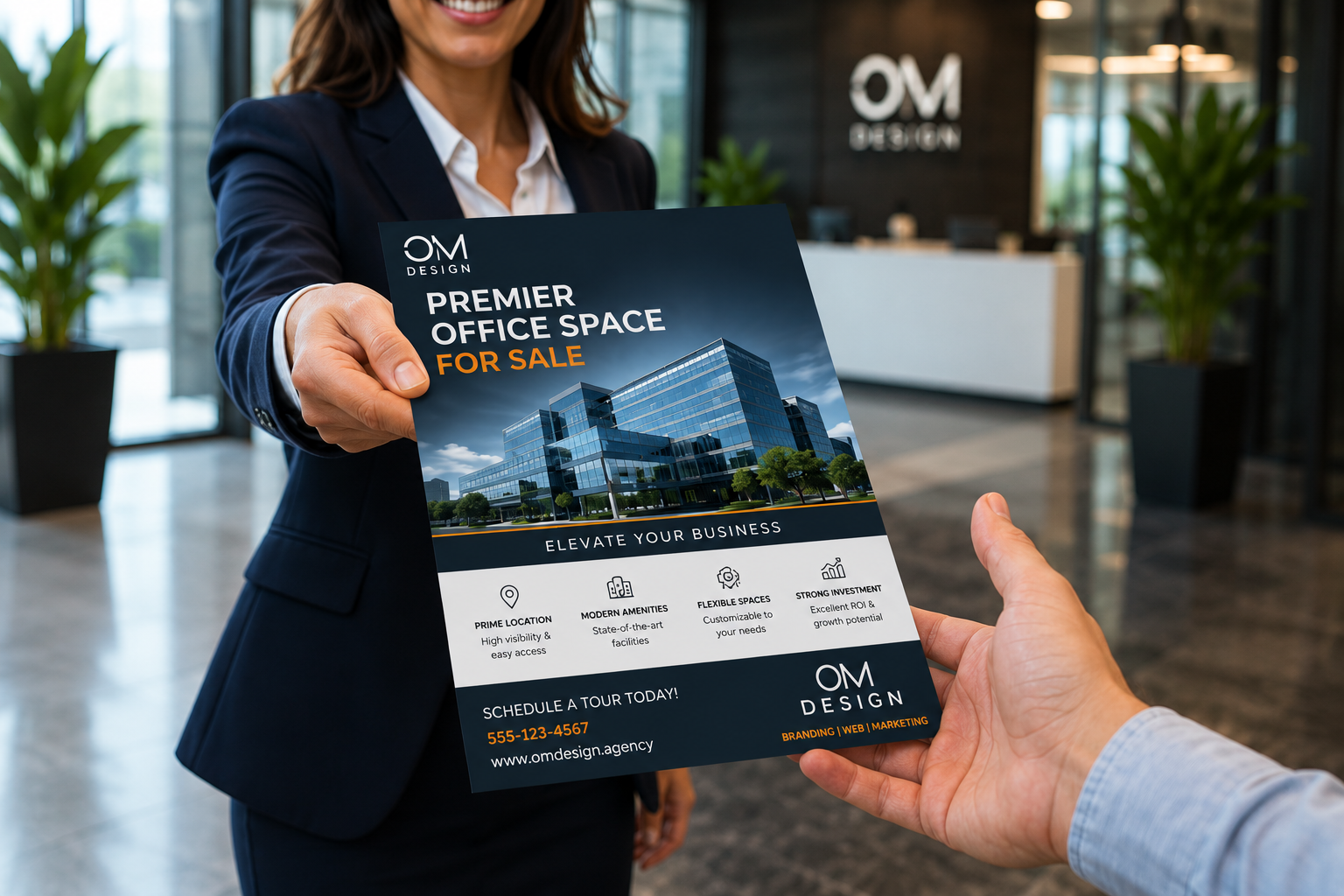
In commercial real estate, a good real estate flyer still matters. You can market via social media, Instagram, email, and websites, but a flyer gives potential consumers a clear, easy-to-remember message to evaluate. It can help you have face-to-face interactions, act as a digital flyer, and keep your listing top of mind after a meeting. With a clear design and focused content, your flyer becomes more than a giveaway. It provides a concrete sales tool.
Why Effective Real Estate Flyer Design Matters for CRE Marketing
In commercial real estate marketing, your flyer is frequently the first structured glimpse of a listing. It helps your target audience grasp the important details, shapes the perception of the property, and enhances your in-person pitch. That’s why real estate flyer design is important.
The main aspects are an easy, clear headline, high-quality photos, a logical layout, brief listing facts, a straight cta, and prominent contact information. When these aspects operate together, they enhance brand identification and make the property easier to grasp. Here are some examples to explain how this works in practice.
The Role of Property Flyers in Attracting Buyers and Investors
A real estate flyer gives potential buyers and investors a quick way to review the most important information. In high-value transactions, people still rely on direct conversations and printed materials. A flyer adds another touch point and gives prospects something to revisit after a meeting, tour, or open house.
Commercial real estate flyers should be designed differently from residential flyers. The target audience is usually more focused on business value, location benefits, square footage, lease terms, and access. That means the info should feel tighter, more practical, and less emotional in tone.
You also want the flyer to support other channels. It should integrate well with your website, postcards, neighborhood mailers, or digital flyer campaign. As part of a larger system, the flyer will help purchasers remember your property and easily compare it to other possibilities.
Impact of First Impressions in Commercial Property Flyer Success
A flyer has just a few seconds to grab attention; thus, first impressions count. A busy page, or a cheap or hard-to-read page, can halt people before they get to the real value of the property, in commercial real estate, which can cost you substantial interest.
“The visual appeal is not born of embellishment, but of disciplined design elements.” The flyer is well organized, with a wonderful main image, a direct headline, well-balanced spacing, and readable type. Keep the message concise, and don’t let too much text compete with visuals and photos for attention.
Likewise, your flyer must fit your brand identity. You build trust with consistent colors, logo, and presentation style across your website, signage, and print media. Improving the first impression and making it consistent with the rest of the property increases the chances that buyers will consider the house legitimate and worth a second look.
Key Elements Every CRE Flyer Design Should Include
You should have the fundamentals a reader expects to see immediately in any commercial real estate flyers. Clear headline, quality images, property facts, location context, price/lease information, visible logo and direct contact details. These design aspects help readers digest the offer more easily.
A strong cta is also necessary. Your real estate flyer should tell people the next step, whether that is booking a tour, requesting more info, or visiting your site. With those basics in place, you can focus on the sections that make the flyer more persuasive.
Headlines That Capture Buyer and Investor Attention
Your headline is a heavy one. It’s at the top; it establishes the tone and gives your target audience a reason to keep reading. People are scanning fast in a busy real estate firm. Short phrases tend to perform better since they provide value without slowing the reader down.
Good headlines focus on one strong angle. This could be a location advantage, a new pricing model, or a huge feature. They must work with the image, help the words, not compete with it. A busy top section kills the effect and makes the flyer harder to scan.
Useful headline habits include:
- Start with the strongest property benefit.
- Use short, direct wording.
- Don’t put a bunch of messages on top of one another.
The rest of the flier is simpler to read when the headline is concise.
Essential Property Details to Highlight for Maximum Appeal
A good headline will get attention, but your listing still needs the specifics about the property. Readers want answers immediately, with footage, pricing, an address, and what makes the place work. The best designs for potential clients are those that make this information easily visible without cluttering the page or burying it in excessive paragraphs.
Also, the information must be specific to the kind of property. Transit and lifestyle amenities may be needed adjacent to office space. Industrial listings may require highway access, power, or loading. For retail, visibility and foot traffic could be important. Quality is no substitute for quantity.
| Detail | What to show clearly |
| Building info | Name, address, listing type |
| Size and terms | Footage, price, lease terms |
| Features | Key amenities and highlights |
| Access | Map cues, parking, transport |
| Response path | Website, email, phone number |
Clear structure helps buyers judge fit quickly.
Choosing Images That Make Your Property Flyer Stand Out
Pictures affect emotion even before the reader reads the text. The best graphics for a real estate flyer are high-quality, realistic photos of the property that build confidence. One good photo is better than a bunch of poor photos fighting for attention.
Supporting graphics may be incorporated but should not detract from the primary photo. Visual beauty is a goal; clarity is the goal. When the photographs are clean, well-lit, and relevant, the flyer seems more professional and gives the property greater presence in the marketplace.
Using High-Quality Photos for Commercial Real Estate Flyers
High-quality photos are the best. Because they create perception instantly, they react to the picture before reading the features. Sharp, well-lit photos tell of care, transparency, and professionalism. Even if the property is good, bad images might decrease interest.
Select one main image to be the focus of the flyer. Supporting visuals should be context, not visual noise. Emphasize the property’s quality with balanced lighting, clear composition, and angles that make the space easy to understand. It improves the look and keeps the focus on the listing.
There’s a branding upside as well. Same image quality across flyers, brochures, and websites helps build brand recognition. Every property piece appears designed and finished; your marketing feels more solid. Trust in the property and the team presenting it can be built this way.
Incorporating Maps and Location Highlights Effectively
Maps help readers immediately understand the context. Location is a major factor in the value of commercial real estate; thus, adding the property’s location to the flyer can increase its value. A simple map and some local landmarks help customers assess the offer without having to visit elsewhere.
Easily personalize templates with the map, nearby access points, and property-specific bonuses. Much better, if the flyer is utilized in neighborhood mailers or handed out at a community event, geographical cues are much more helpful because readers desire immediate relevance. A QR code can also link the flyer to further information online.
Focus on practical nearby features such as:
- Transportation and parking access
- For users at the office: cafes, restaurants, gyms
- Industrial access to the highway, train, or loading area.
When maps and highlights are targeted, the flyer feels more helpful and more persuasive.
Layout, Readability, and Design Best Practices for CRE Flyers
A strong layout takes the reader through the headline, vital details, and action. Good readability derives from spacing, order, and constraint. Even beneficial information becomes difficult to comprehend when the site is too packed. Thus, the structure is as important as the substance.
Current design trends in real estate flyers still favor simple font choices, limited color palettes, and clean design elements. These choices are not just stylish. They make the flyer easier to scan and help the property feel more credible. The next two sections break that down.
Balancing White Space, Color, and Typography for Clarity
One of the most useful design aspects in designing a flyer is white space. It allows sections to breathe, preventing the page from looking cluttered. When all the space is occupied, the reader’s eye has nowhere to rest, and readability diminishes.
Color should add to the message, not subtract from it. And while a touch of accent color might help draw attention to pricing, a CTA, or a prominent feature, neutral shades tend to feel more sophisticated. Too many shades might make the flyer look out of control and lose focus.
Typography serves the same purpose. Limit yourself to two or three simple typefaces. A clear hierarchy among headlines, subheads, and body text makes it easy for visitors to scan. Your flyer feels structured rather than overwhelming, thanks to a mix of white space, color, and typeface, which makes it stand out.
Organizing Information for Easy Scanning and Engagement
Easy scanning is a must in a commercial flyer. Buyers and renters want the most important information up front, not buried in extensive body copy. Start with the headline, picture, and facts about the property, then go into location, pricing, and contact information. This makes for a logical flow through the page.
Commercial layouts are more data-driven than residential. The information ought to support quick decision-making, which means greater organization and less tale-telling. If the page feels efficient and relevant to the target audience, engagement increases.
A simple order often works best:
- Top: listing picture, image, and headline
- Middle: maps, features, advantages, and cost
- Bottom: contact information and CTA
Additionally, bullet points are helpful. They condense information into brief, useful ideas that readers may absorb in a few seconds.
Calls-to-Action and Contact Information that Drive Inquiries
A sleek flyer might nevertheless fall flat without a solid call to action. Readers need to know what to do next. Should they ask for specifics, book a tour, or call now? Your messaging should get right to it and put the action where it’s clear to see.
If you are creating a professional-looking real estate flyer for free or from templates, this part still matters most. Make the contact details obvious, including email and phone number, so there is no friction between interest and response.
Crafting Clear CTAs that Encourage Tours and Questions
A cta should feel direct and useful. If a flyer ends with vague language, readers may not act. Clear phrases work better because they remove uncertainty and tell people exactly what the next step is. That is one of the key elements of an effective flyer design.
Think about what response fits the listing. You may want readers to book tours, ask questions, request a report, or attend an open house. The wording should align with that goal and appear near the bottom of the page, where the reader naturally lands after scanning the details.
Strong cta ideas include:
- Schedule a private tour today
- Request full property info
- Contact our team with questions
The simpler the direction, the easier it is for interested prospects to respond right away.
Presenting Broker and Contact Info Professionally
Your broker and contact info should be as polished as the rest of the leaflet. If this part is disorganized, small, or incomplete, it can make you look unprofessional. Easy to find and in keeping with the overall arrangement, so readers don’t have to hunt for the right person.
There are free tools and templates to assist you in creating and printing, but they still require some careful preparation. Use tidy spacing, consistent alignment and simple labels. This helps the contact block look professional and ensures that no important detail is omitted.
| Contact element | Best practice |
| Broker name | Use full name and title |
| Phone number | Make it large and readable |
| Keep it visible and simple | |
| Company details | Add logo and company name |
| Digital follow-up | Include website or qr code |
A tidy contact section supports trust and makes follow-up easier.
Conclusion
In conclusion, an effective commercial real estate flyer is important for getting the attention of potential purchasers, tenants, and investors. By highlighting critical design components such as compelling headlines, high-quality images, and clear property details, you can create a flyer that not only informs but also entices your audience to take action. Remember to incorporate maps, location highlights, and a professional layout to enhance readability and engagement.
A well-designed flyer sets the tone for your property and reflects your brand’s professionalism. If you’re looking to elevate your real estate marketing, contact OM Design Agency today for professional flyer design services to help you attract more buyers and stand out in the competitive market.
Frequently Asked Questions
1. What makes commercial real estate flyer design different from residential flyers?
Commercial real estate flyers are more data-driven and practical than residential flyers. The target audience needs commercial value, access, size, and terms rapidly. That modifies the layout and design, which must prioritize clarity, key property details, and quick scanning over a more lifestyle-led presentation.
2. Are there free tools or templates for property flyer design?
Yes, you can create a simple real estate flyer using templates and free resources if you want to print it quickly or use it digitally. But the result hinges on how well you use the fundamentals of design, such as spacing, font, image quality, and content organization. A template is greatest when it is thoroughly adapted.
3. Are there free tools or templates for property flyer design?
Yes, there are plenty of templates and free tools that will assist you in designing a simple real estate flyer with photographs, graphics, and a QR code linking to a virtual tour. The magic isn’t in the instrument. You still need attractive photographs, a clean structure, and clear property information so that the overall flyer feels professional and useful.